Built for Our Youngest Multilingual Learners

Trailblazers builds foundational Literacy + Oral Language Development in an environment built for your youngest learners, with experiences that match how they learn best.

Students develop language proficiency and literacy skills together rather than in isolation.

  • 9 Knowledge-Building Themes cover topics that move from familiar ideas like myself and my family to bigger concepts like community and the natural world.
  • 28 Topic-Based Trails are included within the learning themes. Each is a complete instructional unit with a predictable 8-lesson structure.
  • Each trail draws from 24 interactive activity types, including read-aloud e-books, speaking prompts, and hands-on phonics practice.
Cartoon bear and snow leopard wearing blue jackets above the word Trailblazers in yellow letters.

 Built for the Way Young Children Learn

Language & Literacy Development is Connected

In Trailblazers, langauge and literacy development happen together. Each trail opens with a paired fiction and nonfiction e-book, read aloud with highlighted text to build print awareness.

Benny guides students through vocabulary and speaking prompts before moving into connected phonemic awareness, decoding, and word-level practice.

Developmentally appropriate Navigation

Audio and visual guidance appears on every screen, so young learners can navigate independently.

A simple, uncluttered interface keeps them focused and when a student needs to try again, Trailblazers offers a supportive redirect.

No score shaming, and no failure language.

Interactive, Hands-on Learning Experiences

Short Learn Videos, gamified vocabulary activities, and hands-on practice, like tracing and sound-blending, keep lessons active.

Trailblazers is built for small hands and growing minds, with a touch-first design that helps young learners build confidence on their own.

Inside a Trailblazers Lesson

Lessons open with a paired fiction and nonfiction e-book, read aloud with highlighted text, before Benny guides students through vocabulary and speaking practice tied to the story. From there, students move into foundational skills like letter-sounds, decoding, and blending, with checkpoints at Lesson 4 and Lesson 8 to track progress along the way.

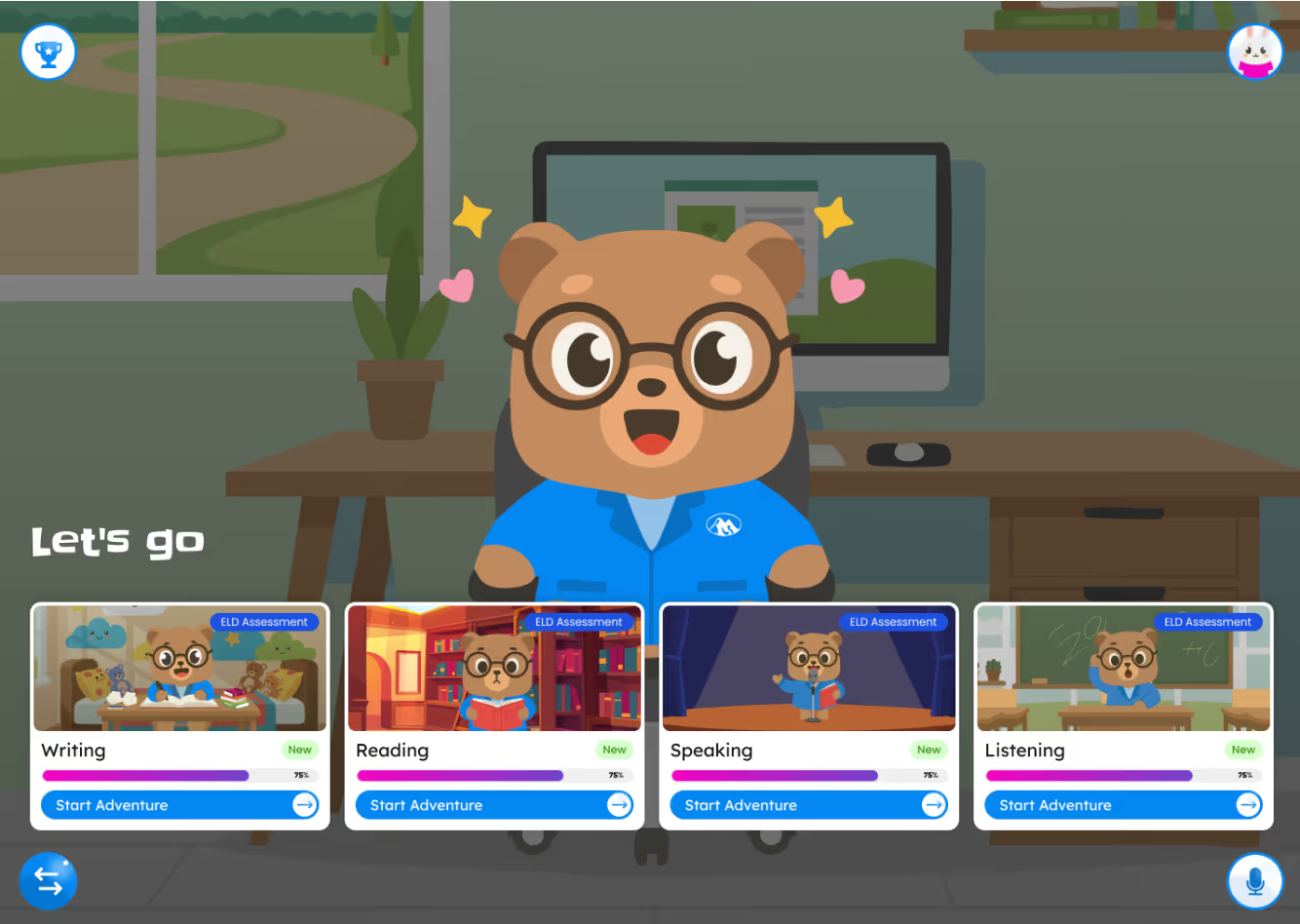
Cartoon bear in glasses at desk with computer and four learning options: Writing, Reading, Speaking, Listening.

Benny and Friends Guide Young Learners as they build on their language and literacy skills together

Interactive E-book

Story read-aloud with word-level highlighting that builds print awareness

Language Boosters

Vocabulary practice cards

Listening and Speaking Tasks

Listen, record, and respond activities

Reading and Writing Tasks

Tasks build from word, to sentence, to discourse levels

Building blocks (learn, practice & play)

PA, DE, HFW, MA and Syntax videos with skill-specific interactive practice through game-like activities

Educator progress monitoring

Educators can listen and look at student responses to guide instruction

Comprehensive Teacher Supports

Teacher Trail Guides with Flexible Implementations

Trail Guides include recommendations for whole-group, small-group, or 1:1 instruction.

Teachers can preview lessons during planning and assign partial or full trails to fit their classroom's needs.

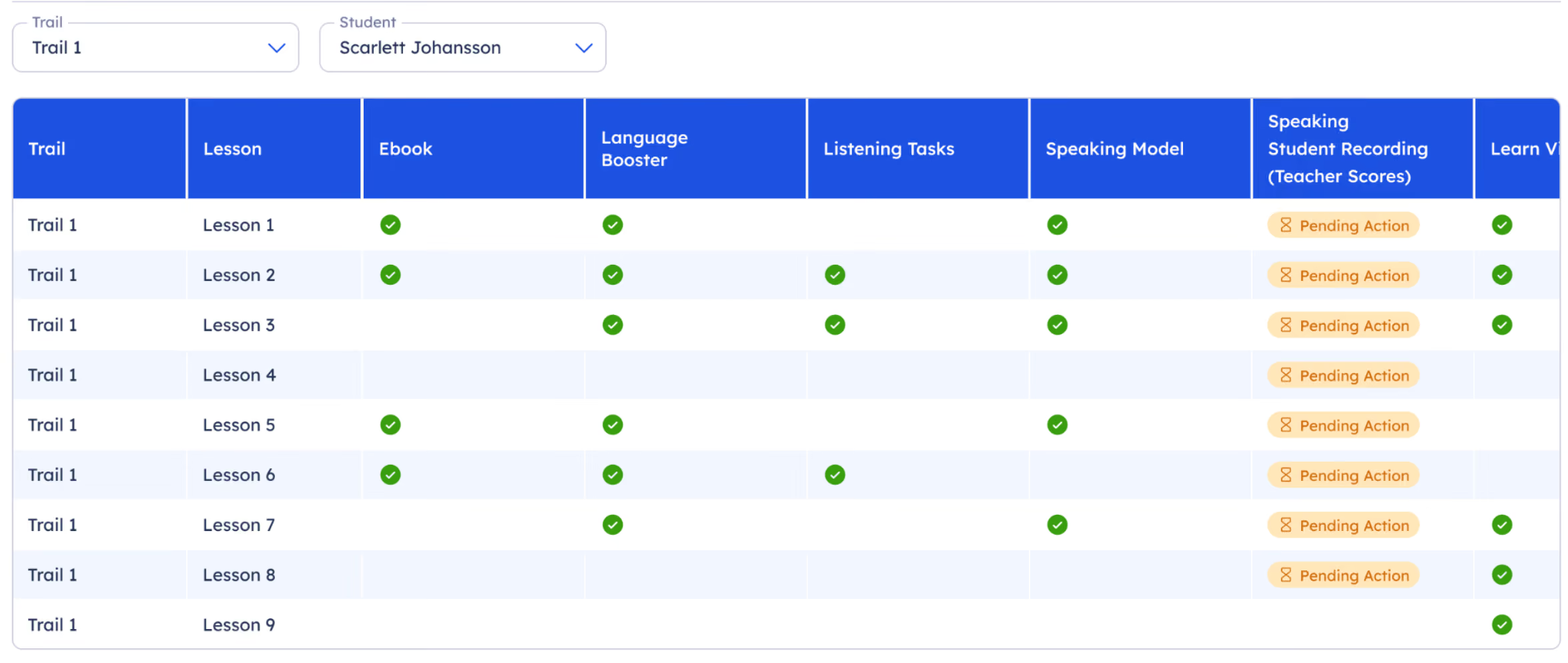
Real-time Reports

Class trail progress:
Lesson status for every student — green checks mark completed components

Student trail progress:
Individual work, pending reviews, and performance across language tasks

Trail progress overview:
Bird's-eye class view — which trails are started, in progress, or done

Language Foundational Skills Covered


Every trail builds the core language and literacy skills young multilingual learners need most, including phonemic awareness, decoding and encoding, heart words, syntax, and morphological awareness, practiced through short, interactive activities.

  • Language Boosters build listening and speaking by having students listen to a word, see the image, and record themselves saying it.
  • Drag and Drop strengthens phonemic awareness as students drag letters to build words or sort sounds into categories.
  • Letter Tracing supports decoding and encoding by having students trace uppercase and lowercase letters with a finger on screen.
  • Interactive Games, like spinning a wheel or jumping through puddles, turn skill practice into playful challenges for mastery.