One Powerful Ecosystem. Every Learner On Track from Identification to Reclassification.
Discover how Summit 360™ unifies instruction, compliance, data, and reclassification forecasting into one connected ecosystem that accelerates English learner success from identification to reclassification.
By
Share this post
Table of contents
TL:DR: Summit 360™ is a unified ecosystem built to help districts accelerate English learner growth from identification to reclassification. Combining the instructional power of Connect to Literacy™ with the compliance and oversight capabilities of Summit Insights™, the platform brings personalized instruction, real-time data, automated accountability workflows, and predictive reclassification forecasting into one seamless system. Built for Texas and California, Summit 360 empowers educators with precision instructional tools, district leaders with complete visibility, and multilingual learners with a clearer, faster pathway to proficiency and long-term success.
Introducing Summit 360™— One Unified System for Districtwide Success.
Powered by Summit Insights™ and Connect to Literacy™.
Powered by Summit Insights™ and Connect to Literacy™.
Serving English learners well is one of the most consequential — and most complex — responsibilities a school district carries. From the moment a student is identified through the day they're reclassified, districts are coordinating assessments, instructional decisions, state compliance, family communication, and a steady flow of data and documentation.
Summit 360 was built to bring simplicity and efficiency to multilingual programs — a complete, unified system that accelerates every English learner's pathway to reclassification. At its core is an instructional engine purpose-built to accelerate and map reclassification pathways: personalized instruction calibrated to each student's proficiency, designed from the ground up to drive meaningful growth in line with state assessment criteria.
Currently tailored for Texas and California — with additional states on the roadmap — Summit 360 aligns to each state's specific proficiency expectations, reclassification criteria, and accountability frameworks, so compliance and instruction work seamlessly as one system.
The promise is straightforward: the clarity, compliance, and instructional impact districts need, delivered in one seamlessly connected ecosystem that puts every English learner on a clear, predictive pathway to reclassification.
Summit 360 brings two integrated solutions together as one.
Connect to Literacy is the instructional engine. It accurately places every student, builds a personalized learning pathway across all four domains, and amplifies instructional impact with research-affirmed strategies and activities that strengthen both language proficiency and access to grade-level content — evidence-based and proven to strengthen outcomes for English learners.
Summit Insights, powered by EduSkills, is the 360° oversight and accountability layer — the system districts rely on to unify data, automate documentation, monitor compliance, and forecast reclassification with confidence.
Brought together to provide a seamless system, these powerful solutions deliver what no single-point tool can: a complete, connected solution that supports English learner success from identification to reclassification.
What Sets Summit 360 Apart?
Summit 360 is built to ensure districts stand out.
Personalized, data-informed instruction. Personalized Learning Plans go beyond targeted practice across all four domains. They deliver real-time proficiency data in reports paired with dynamic, PLD-aligned instructional strategies that shape each instructional move into one that truly moves the needle.
Guaranteed growth for every student. A powerful, proven instructional engine backed by a firm proficiency growth guarantee.
Full visibility and control that empowers leadership. Districtwide insights into proficiency growth and reclassification forecasts Program decisions empowered by current data. Automated accountability workflows. LPAC documentation generated, processed, and stored.
Sustained partnership that delivers results. In-house district success and PD specialists provide support and guidance aligned to district’s goals—fueling implementation and ensuring long-term success. With a 99.4% renewal rate, districts consistently validate the strength and impact of this dedicated partnership model.
This isn’t a collection of tools adapted to fit the work; it’s a system architected from the ground up to provide districts with complete oversight and an instructional engine proven to accelerate reclassification pathways for English learners.
A clear pathway to reclassification for every student
Mapped, documented, and predictive
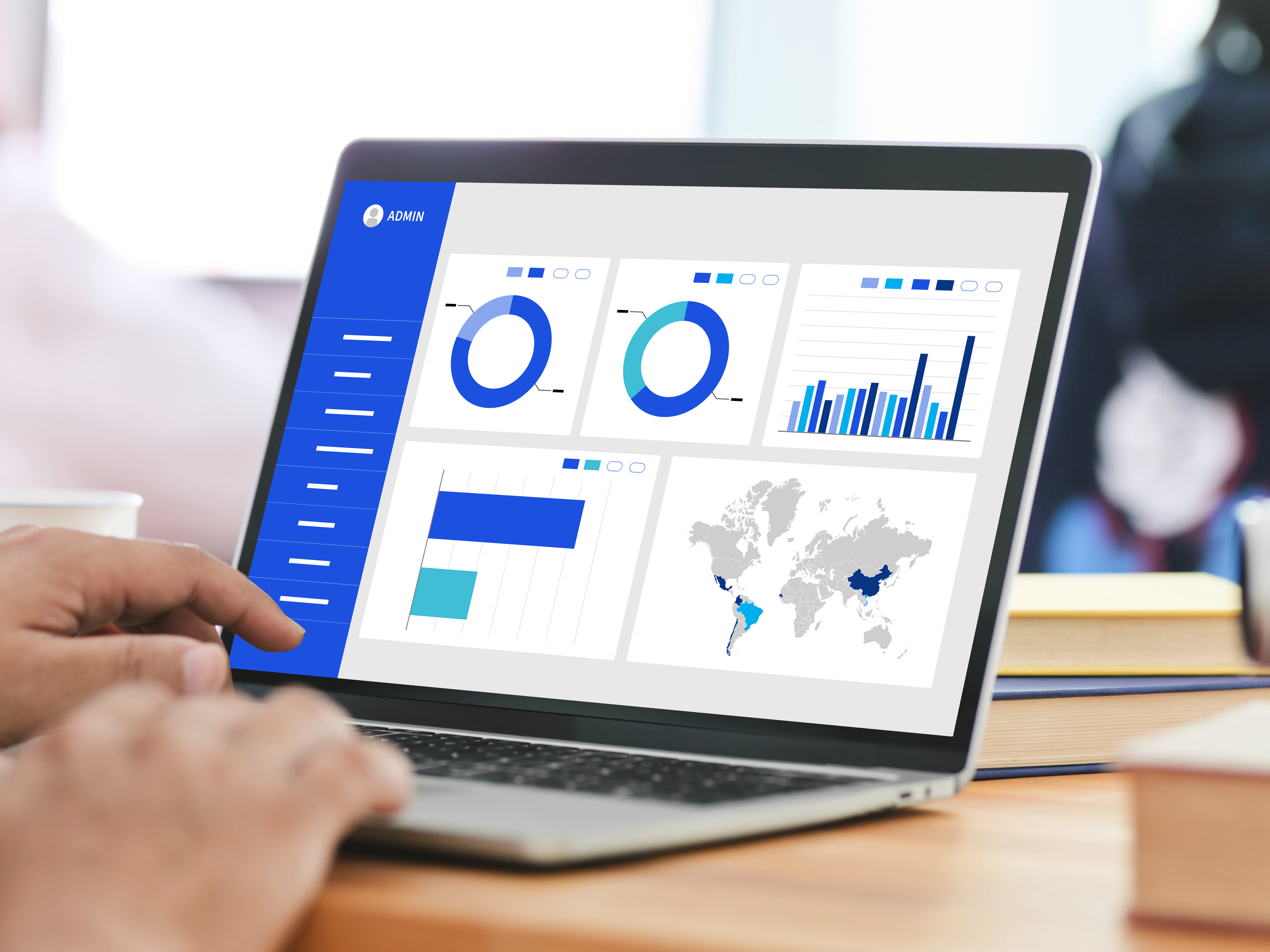
Administrator dashboard in Summit 360
Every multilingual learner's journey moves through the same critical stages, and every stage involves instructional decisions that need to be documented, defensible, and informed by real data. When those stages are handled in separate systems, gaps open — a late identification here, a missing signature there, a Long-Term English Learner indicator, noticed too late in the day for teams to intervene successfully.
Summit 360 treats the full pathway as one continuous workflow, aligned to the specific requirements of the state it serves. Identification is handled efficiently with automated workflows that lay a documented foundation for every English learner. Learners are then efficiently placed on a personalized learning pathway that ensures they're getting the language and content integrated instruction that not only builds proficiency, but provides access to scaffolded, grade-level instruction.
Program enrollment records stay current. Assessment results and formative data feed directly into real-time reports that inform what happens next. Leaders have crystal clear oversight, with clear reclassification forecasts and LTEL warning signs that surface early enough for teams to intervene — not after the testing window has closed.
The result is a district where every English learner has a clearly mapped and documented pathway to reclassification, and every educator working with that student has the clarity to sharpen instruction so that it delivers exactly what's needed, when it’s needed.
Personalized instruction at scale, driving proficiency gains for every learner, at every proficiency level
This is where Summit 360 truly stands out. Compliance and dashboards matter, but they don't move the needle for students. What drives proficiency gains is precision instruction. The research-backed instructional approach in Connect to Literacy empowers educators to maximize results for every single student.
English Language Development across all four domains. Every learner makes progress in listening, speaking, reading, and writing simultaneously, with practice across every domain calibrated to their zone of proximal development. By integrating language with grade-level content, the personalized learning pathways ensure students develop the language they need. Instruction is meaningful and language proficiency grows in the contexts and classrooms where students will ultimately use it.
Personalized Learning Plans (PLPs), refreshed across the year to match real student growth.
Proficiency growth across all four domains
This is the engine of the instructional model and it's designed to remove setup friction so teachers get precision from day one and maintain it all year.
At the beginning of the year, districts skip the cold start. Summit 360 imports each student's state ELP scale scores directly, so placement is grounded in the most authoritative data already in hand — no separate diagnostic marathon before instruction can begin. If no data is available, the placement engine in Connect to Literacy is precise and efficient. Every student then takes a short validation assessment that confirms proficiency and sharpens the picture by domain. Together, those inputs generate each student's first Personalized Learning Plan (PLP-1) and surface real-time, PLD-aligned instructional strategies teachers can put into practice immediately.
At the midpoint of the year, PLP-2 is generated. Districts can either run a brief Middle of Year (MOY) check-in or simply use the average of progress within PLP-1 to recalibrate. Either way, PLPs keep pace with students without pulling teachers into weeks of re-diagnosing and re-grouping.
For districts that want more frequent growth signals between state assessments, optional benchmark assessments plug in cleanly — and crucially, they don't just produce a score. Benchmark results feed directly back into the PLP cycle, driving the next round of grouping, practice, and strategy recommendations. Growth measurement and growth drivers become integrated parts of the same effective instructional system.
Newcomer pathways and home-language support.
For students entering U.S. schools for the first time, the first weeks matter enormously. Newcomer OnRamp TREKs close the most urgent literacy and learning gaps with foundational language skills, decoding work, academic routines, and content scaffolds — along with supports available in 30+ home languages so students can access instruction from day one. It's a deliberately designed on-ramp, not a watered-down version of mainstream content.
Real-time grouping reports linked to instructional strategies.
Grouping report from Connect to Literacy
A proficiency level without a playbook doesn't help anyone at 8:30 on a Tuesday morning. Connect to Literacy pairs every PLP with real-time grouping reports that show teachers, at a glance, which students are clustered at which Proficiency Level Descriptor — and surfaces the specific instructional strategies matched to that level. Teachers walk into class knowing who needs what and what to do with them. Grouping stops being a planning burden and becomes a daily instructional asset.
Foundational literacy skills — phonemic awareness, decoding, syntax, morphology — are embedded throughout Connect to Literacy, but treated with the nuance multilingual learners require. A student whose first language uses a different writing system, different phonology, or different sentence structures is not well served by materials designed for monolingual English speakers. Connect to Literacy bridges those differences intentionally, so skills are built on a foundation that respects each learner's cultural, linguistic and educational assets.
Speaking and writing are where English learners historically get the least practice and the slowest feedback, because live scoring simply doesn't scale. Connect to Literacy's AI feedback engine, trained on tens of millions of K–12 student responses across more than 120 languages, changes that. Students get instant scoring on pronunciation and fluency while they're speaking, and real-time suggestions on grammar, mechanics, and vocabulary while they're writing. Every response a student produces becomes an opportunity for targeted growth — and every AI-scored response is visible in the teacher dashboard, so educators get the insight without the grading workload. More practice, faster feedback, students who have the agency to adjust and stretch their output, and teachers who spend more time teaching and less time grading.
Scaffolding access to rigorous grade-level content.
Too often, "support" for English learners has meant slowing down or simplifying content until it no longer sufficiently prepares students. Connect to Literacy takes the opposite approach: the instruction is designed to scaffold access to rigor, not retreat from it. Language development is integrated with grade level content expectations.
Real-time progress monitoring and timely intervention
Annual state assessments will always have an important role, but they often arrive too late to shape the instruction happening on a daily basis. Districts need visibility into growth as it's happening.
Connect to Literacy gives teachers and administrators visibility through more than 40 built-in reports — PLD groupings, class roster views, ELD progress reports clearly displayed in dashboards across all four domains.
When teachers can see how a student is progressing week to week, instructional moves become more precise. When leaders can see how a school or grade level is trending, support arrives before problems compound.
Accountability and reporting is simplified, centralized, and audit-ready
Compliance is non-negotiable, and the cost of getting it wrong — in time, in funding, in student outcomes — is tremendous.
Summit Insights, the data layer that underpins the Summit 360 ecosystem, consolidates SIS, LMS, ELPA data, and program records into a single state-aligned platform. Identification, program enrollment, and reclassification documents are automatically timestamped, stored, and signature-ready. Title III and federal compliance dashboards give leadership full visibility without a scavenger hunt through filing cabinets or disconnected systems.
Reclassification forecasting is built in, surfacing early indicators of potential Long-Term English Learners so teams can intervene while there's still time to change the trajectory. Every reclassification decision is grounded in data the district can stand behind.
Partnership that doesn't end at launch
Powerful systems and instructional tools alone are not enough to guarantee student outcomes. What provides the power for districtwide growth is the combination of the right tools and the right support to use them well.
That's why Summit 360 is sustained by dedicated, districtwide partnership led by in-house specialists. Implementation support, tailored coaching, leadership workshops, learning walks, and classroom modeling are part of the robust partnership model that drives success. District teams get data-informed guidance shaped to their specific goals and contexts, and teachers get the coaching that turns new practices into durable habits.
And because families are partners in language development, Summit 360 extends the connection home: progress communications in 30+ languages, complimentary access to 4 accounts that enable families to accompany students on their learning journey, and engagement events that bring caregivers into the journey.
When everything is connected, every learner moves forward.
Summit 360 isn't a list of features bolted together. It's an integrated districtwide ecosystem — two unified solutions, Connect to Literacy and Summit Insights, working in concert so that data-informed instruction, compliance, and accountability aren't separate workstreams but a single coordinated system with the constant flow of data and support needed to sustain success.
When identification feeds placement, placement feeds instruction, instruction feeds assessment, and assessment feeds reclassification, districts stop managing disconnected tools and start running a strong, coherent English learner program. Teachers spend their time delivering precision instruction. Leaders make and defend decisions with data-informed confidence. Families stay connected. And every multilingual learner has a clearer, accelerated path to proficiency.
That's the promise behind Summit 360 — and the reason more than 5,000 districts already trust Summit K12 to ensure their multilingual learners grow and succeed at scale.


.png)