Sí, Se Puede Is Still a Call to Action: Dolores Huerta Enters the Multilingual Education Hall of Fame
Dolores Huerta's electrifying NABE 2026 induction reminds educators that language, dignity, justice, and collective action have always been inseparable.
By
Amelia Larson
Share this post
Table of contents
TL:DR: At NABE 2026, Dolores Huerta's induction into the Multilingual Education Hall of Fame was more than a tribute to an American icon. It was a reminder that multilingual education has always been connected to dignity, opportunity, economic justice, and the power of communities to act. Huerta began as a teacher. Nearly seven decades later, her message still asks educators to see the whole child—and to turn belief into action.
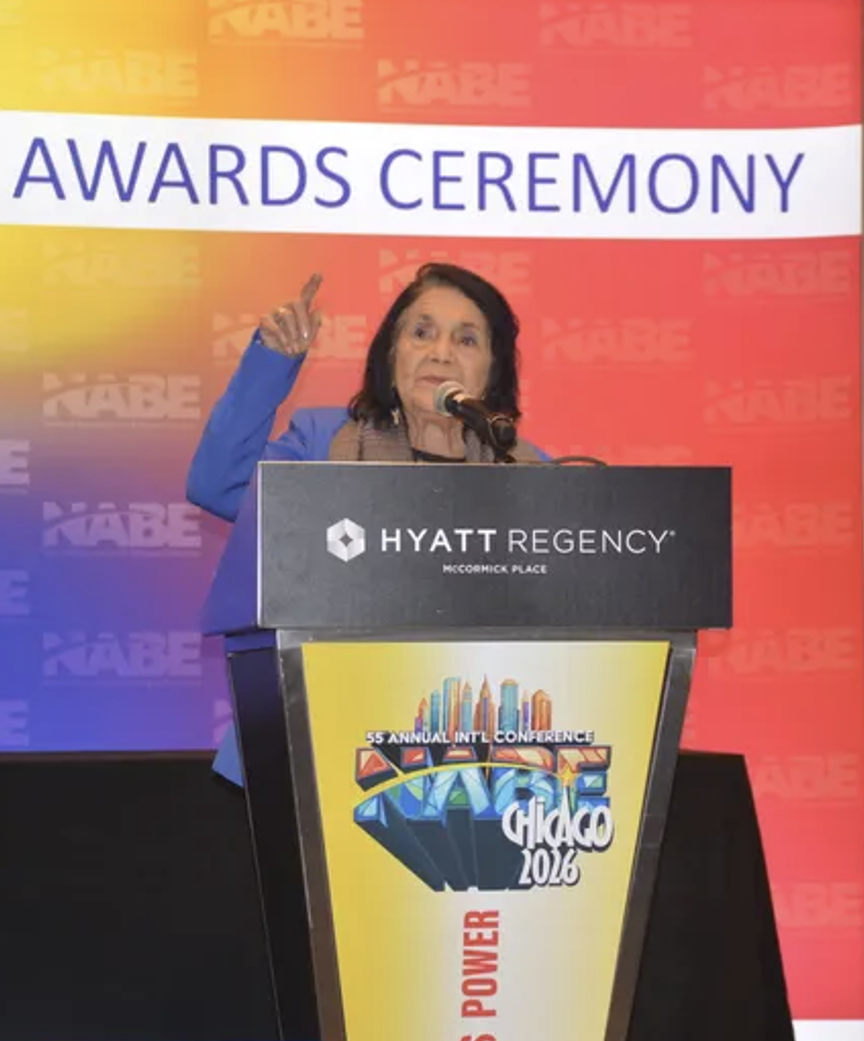
Dolores Huerta addresses the NABE 2026 Awards Ceremony in Chicago.
Some moments honor history. Others make history feel alive in the room.
At 96, Dolores Huerta did not enter the room as a figure preserved in history. She entered as she has lived: with conviction, urgency, and an unshakable belief in the power of o
She Began as a Teacher
Before she became one of the most consequential labor and civil rights leaders in American history, Dolores Huerta was a classroom teacher. She has said that she could no longer bear to see children arrive at school hungry and without adequate clothing. She came to understand that what happened in her classroom could not be separated from what was happening to families in the fields, at work, and in their communities.
That realization changed the course of her life. Rather than helping children endure injustice, she committed herself to changing the conditions that produced it.
For educators, that part of her story matters profoundly. We often speak about the whole child, but Huerta's life forces us to confront what those words require. Children do not leave hunger, housing insecurity, discrimination, immigration fears, family working conditions, or the status of their home language at the schoolhouse door. Teaching is never detached from the larger systems that shape whether children and families can thrive.
Language Is Access—and Access Is Power
Dolores Huerta's place in the Multilingual Education Hall of Fame is not symbolic. Her organizing helped expand the rights, voice, and civic power of communities whose languages and experiences had long been pushed to the margins.
Early in her organizing career, she advocated for Spanish-speaking Californians to have access to the driver's license examination in Spanish. Across decades of work, she understood something our field must never forget: language access is not a courtesy. It determines who can participate, who can advocate, who can navigate institutions, and who is heard.
That is also true in schools. When we honor a child's language, we do more than help that child understand a lesson. We affirm identity. We strengthen the connection between home and school. We recognize families as partners with knowledge and agency. And we expand a student's power to learn, speak, lead, and belong.
A Movement Built Through Collective Courage
In 1962, Dolores Huerta co-founded the National Farm Workers Association with César Chávez, the organization that became the United Farm Workers. She organized, negotiated, marched, built coalitions, and helped secure landmark protections for farmworkers. She also gave the world the rallying cry “¡Sí, se puede!”—yes, it can be done.
Those words have traveled far beyond the movement in which they were born because they express more than optimism. They express collective agency. They remind us that change does not arrive because institutions suddenly become ready for it. Change happens because people organize, persist, and refuse to accept that injustice is inevitable.
That is what made the induction feel so powerful. The applause was not only for what Dolores Huerta accomplished. It was an acknowledgment of what her life still asks of us.
What Her Legacy Asks of Educators
In multilingual education, it is easy to allow the work to become technical: proficiency levels, language objectives, program models, assessment data, compliance requirements. All of those things matter. But Dolores Huerta pulls us back to the moral center.
Do our students experience their languages as assets or as problems to be managed? Do families have genuine access to the decisions that affect their children? Are multilingual learners merely present in our schools, or do they have voice, belonging, and power? Are we teaching students to adapt to the world as it is—or helping them develop the knowledge and agency to shape what it becomes?
Her legacy reminds us that multilingual education is not simply about acquiring English. It is about expanding human possibility without asking children to surrender who they are. It is about ensuring that language never becomes a gatekeeper to opportunity. And it is about recognizing that the people closest to inequity are not waiting to be rescued; they are leaders whose voices must help shape the solution.
A Hall of Fame That Points Forward
The Multilingual Education Hall of Fame honors pioneers whose courage moved multilingual education from the margins toward the center. Dolores Huerta belongs there not only because of the history she made, but because her work connects the classroom to the larger struggle for dignity, representation, and justice.
A Hall of Fame can preserve a legacy. At its best, it can also activate one.
That is what happened in Chicago. We were not simply celebrating Dolores Huerta. We were being reminded that courage is a practice, that voice becomes power when people act together, and that education must prepare young people not only to succeed within the world, but to improve it.
The room was electrifying because her message is still alive.
¡Sí, se puede! is not a phrase from the past. It is a challenge handed to the next generation—and to every one of us entrusted with teaching them.
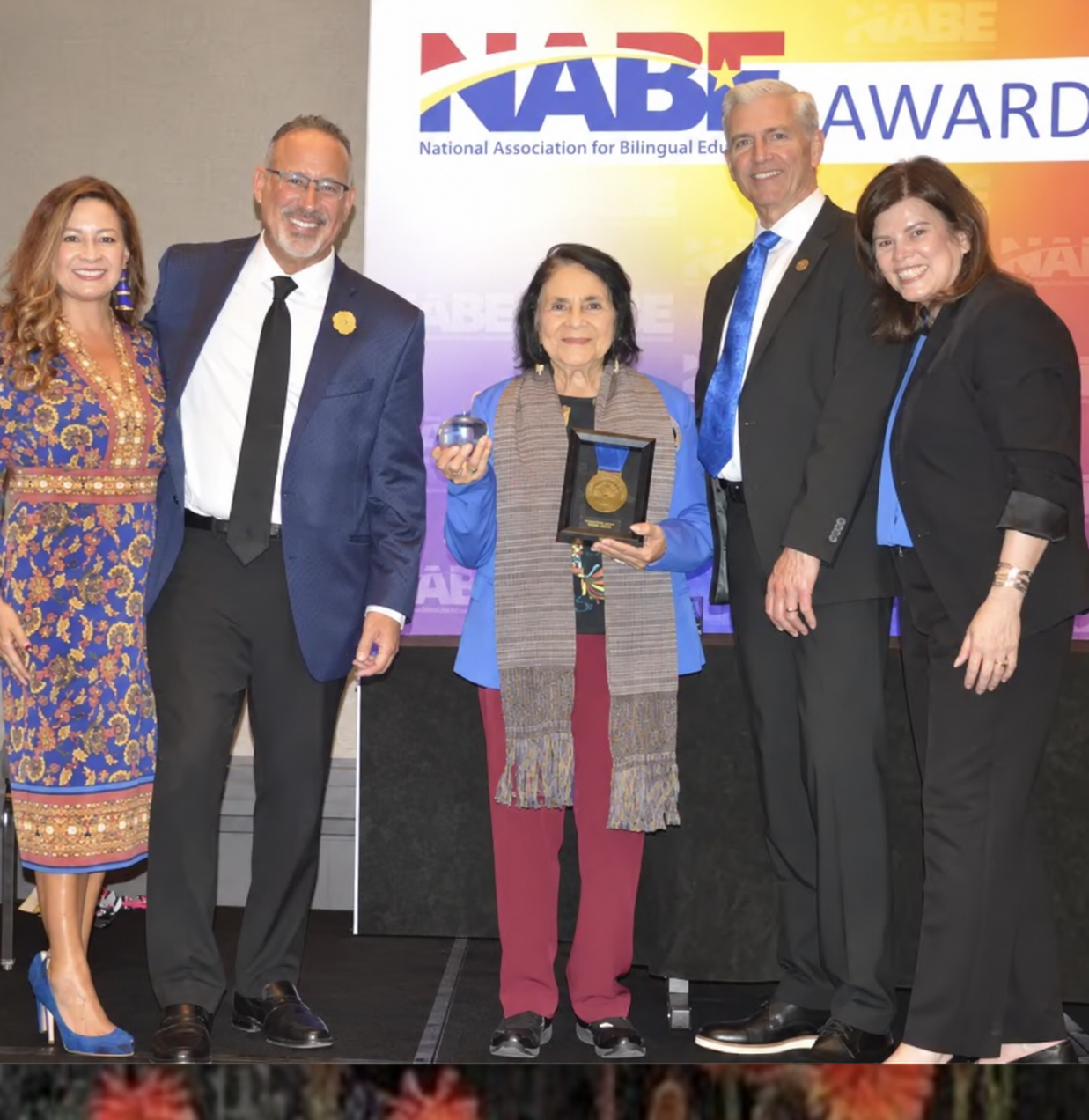
Dolores Huerta with presenters and leaders at the Multilingual Education Hall of Fame induction.