Dr. Ofelia García and the Work That Redefined Multilingual Education

Ofelia García's Hall of Fame induction recognizes her transformative shift from deficit-based to asset-focused education. Learn why translanguaging theory must become system practice.

By
Amelia Larson
Share this post

Table of contents

TL:DR: Ofelia García's induction into the Multilingual Education Hall of Fame honors work that fundamentally changed the field. Her major contributions: (1) reframing bilingual education as a global systems issue, not just a U.S. policy question; (2) introducing translanguaging—the insight that bilinguals draw from one dynamic language repertoire, not two separate systems; and (3) moving theory into classroom practice through actionable pedagogy. Her central contribution is shifting from a deficit lens (what students lack) to an asset lens (what students bring). The article's challenge: recognition matters, but systems must now implement these ideas or the field will have simply acknowledged the truth without redesigning for it.

Standing on the Shoulders of Giants

There are moments in a field’s history when recognition feels less like celebration—and more like a long-overdue acknowledgment of truth.

There are honors that celebrate a career.
And then there are honors that illuminate a movement.

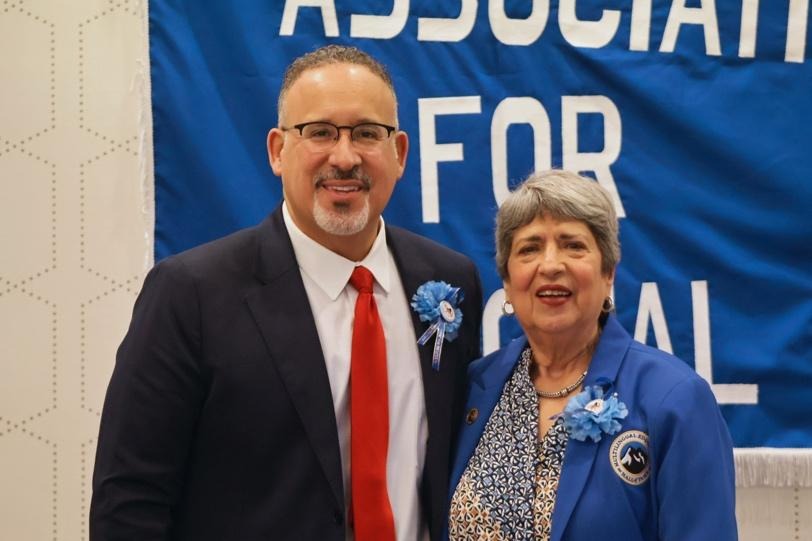
The induction of Ofelia García into the 2026 Multilingual Education Hall of Fame, introduced by Miguel Cardona, was unmistakably the latter.

Because this was not simply about honoring a career. It was about recognizing a body of work that fundamentally changed how we understand language, learning, and the students we serve.

The problem was never how students used language. It was how systems understood it.

Ofelia García is inducted into the Multilingual Hall of Fame. NYSABE 2026
Ofelia García receives recognition from Summit K12 for her dedication to Multilingual Education. NYSABE 2026


Ofelia García Didn’t Improve the Field—She Redefined It

For decades, bilingual education operated within a constrained frame: students were defined by what they lacked in English, language was treated as separate from content, and success was measured against monolingual norms.

Dr. García challenged those assumptions—and in doing so, changed the field itself.

Ofelia García speaks at NYSABE 2026

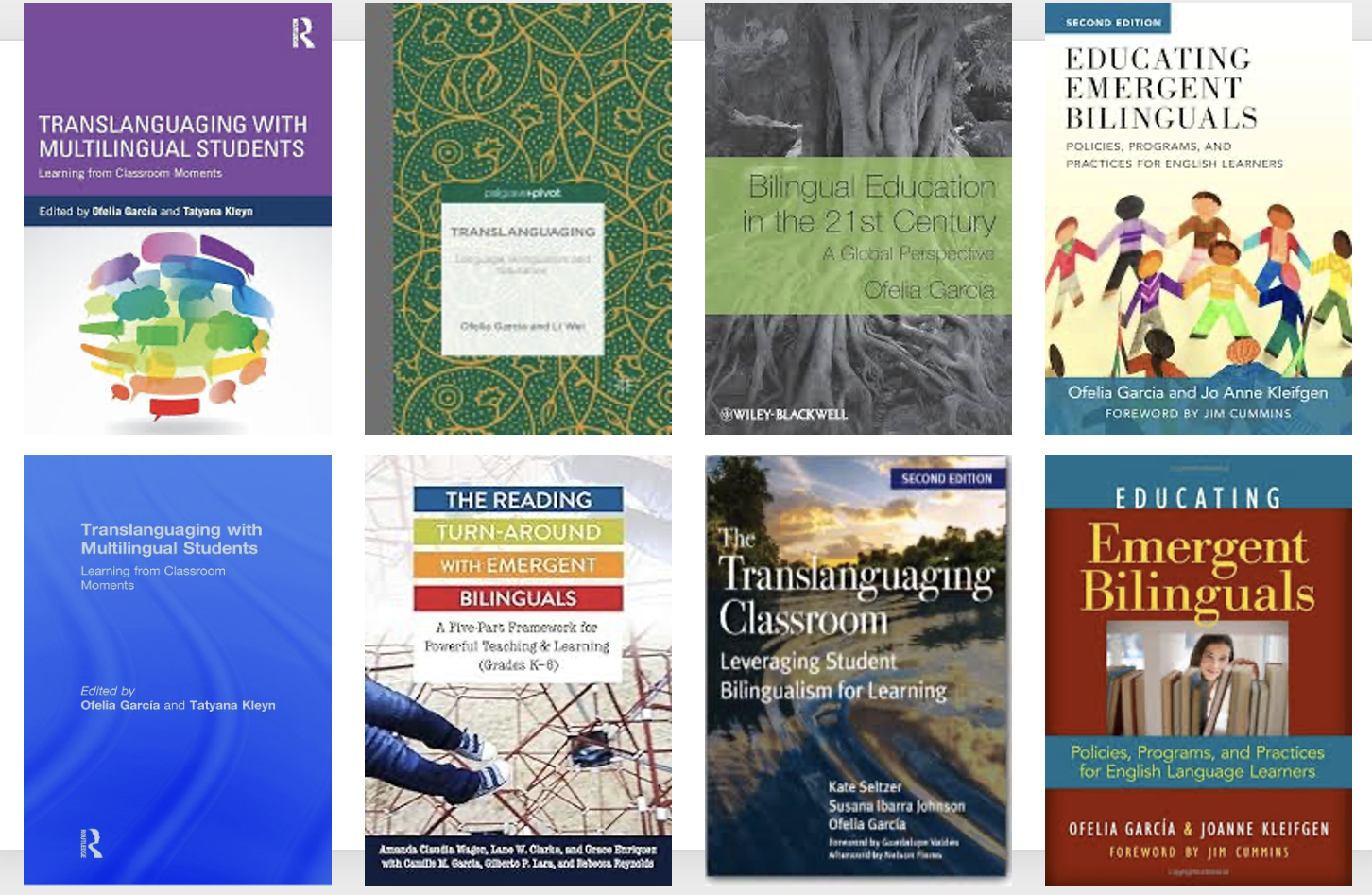
Bilingual Education in the 21st Century: A Global Perspective
Dr. García

The Intellectual Foundation: A Global Reframing

Her landmark book, Bilingual Education in the 21st Century: A Global Perspective, did something the field needed at a critical moment.

It pulled bilingual education out of a narrow U.S. policy conversation and reframed it as:

  • A global phenomenon shaped by migration and history 
  • A field inseparable from identity and policy 
  • A system that must be understood beyond classroom techniques 

This was a shift from program thinking to systems thinking.

And it laid the groundwork for everything that followed.

The Breakthrough: Translanguaging as Reality—Not Strategy

If that first work expanded the frame—

Translanguaging: Language, Bilingualism and Education (with Li Wei) broke it open.

Translanguaging: Language, Bilingualism and Education
Dr. García & Li Wei

Bilingualism is not a problem to solve. It is a resource to design from.

At a time when schools were still built on the idea that languages must be separated, Dr. García articulated something that multilingual communities had always known:

Bilingual individuals do not operate in two separate language systems.
They draw from a single, dynamic repertoire.

This idea—translanguaging—did more than introduce new terminology. It dismantled long-standing assumptions:

  • That language mixing signals confusion 
  • That instruction must control language use 
  • That proficiency develops through separation 

And in doing so, it exposed a deeper issue:
systems were misreading how language actually works.

From Theory to Practice: Making It Usable for Classrooms

The Translanguaging Classroom, Dr. García

Through works like The Translanguaging Classroom, Dr. García ensured her ideas moved beyond theory into classrooms.

She provided educators with:

  • A stance: seeing students’ full linguistic repertoires as assets 
  • A design approach: creating spaces where language can flow 
  • A pedagogical shift: increasing rigor while expanding access 

Many ideas stay in journals.
Dr. García made sure hers did not.

This mattered because it answered the question educators constantly face:
If this is true—what do I do differently tomorrow?

And the answer was not a script.
It was a redesign.

Pushing the Field Further: Language, Power, and Identity

Educating Emergent Bilinguals
Dr. García

Her later work, including Educating Emergent Bilinguals, extended this thinking beyond classrooms.

She connected practice to systems—challenging the field to confront:

  • How policy shapes opportunity 
  • How program models constrain possibility 
  • How assumptions embedded in systems influence outcomes 

Through this work, she made something unavoidable:

Language is never neutral.
And systems that treat it as such will reproduce gaps in access—whether intended or not.

There is no coherent literacy system without a coherent understanding of language.

The Core Shift: From Deficit to Presence

The many works of Dr. García

Across all her work, one idea stands as the throughline:
move from absence to presence.

For too long, systems have asked:

  • What do students lack? 
  • What must be fixed? 

Dr. García reframed the question:

  • What do students already bring? 
  • How do we design from that? 

This is not a philosophical shift.
It is a design shift.

With implications for:

  • Curriculum 
  • Instruction 
  • Assessment 
  • System architecture 

Because systems follow beliefs.
And when beliefs change, design must follow.

Recognition—and a Challenge

Miguel Cardona introduces Dr. García at NYSABE 2026

When Miguel Cardona inducted Dr. García, the moment signaled something important.

Honoring her work matters. It has shaped how educators think, how research is framed, and how leaders begin to reconsider system design.

But recognition alone does not move a field forward. Application does.

Her induction into the Multilingual Education Hall of Fame is not the end of a story.
It is a signal.

The field now knows better.

And the systems we build next will determine whether we simply acknowledge that truth—
or finally design for it.