How Targeted Literacy Instruction Drove 26% Higher MAP Reading Growth for Multilingual Learners
Learn how Summit K12 Connect to Literacy™ Boosted Map Reading Growth by 26%.
Learn how Summit K12 Connect to Literacy™ Boosted Map Reading Growth by 26%.
Despite your best efforts, the national trend tells a painful truth: Multilingual Learners (MLLs) are not catching up! They are stuck in a cycle—reading scores are stagnant; language proficiency is stalled.
In today’s educational landscape—especially in large, diverse urban districts—finding a research-based, results-driven, and cost-effective solution for MLLs isn’t just important, it’s urgent.
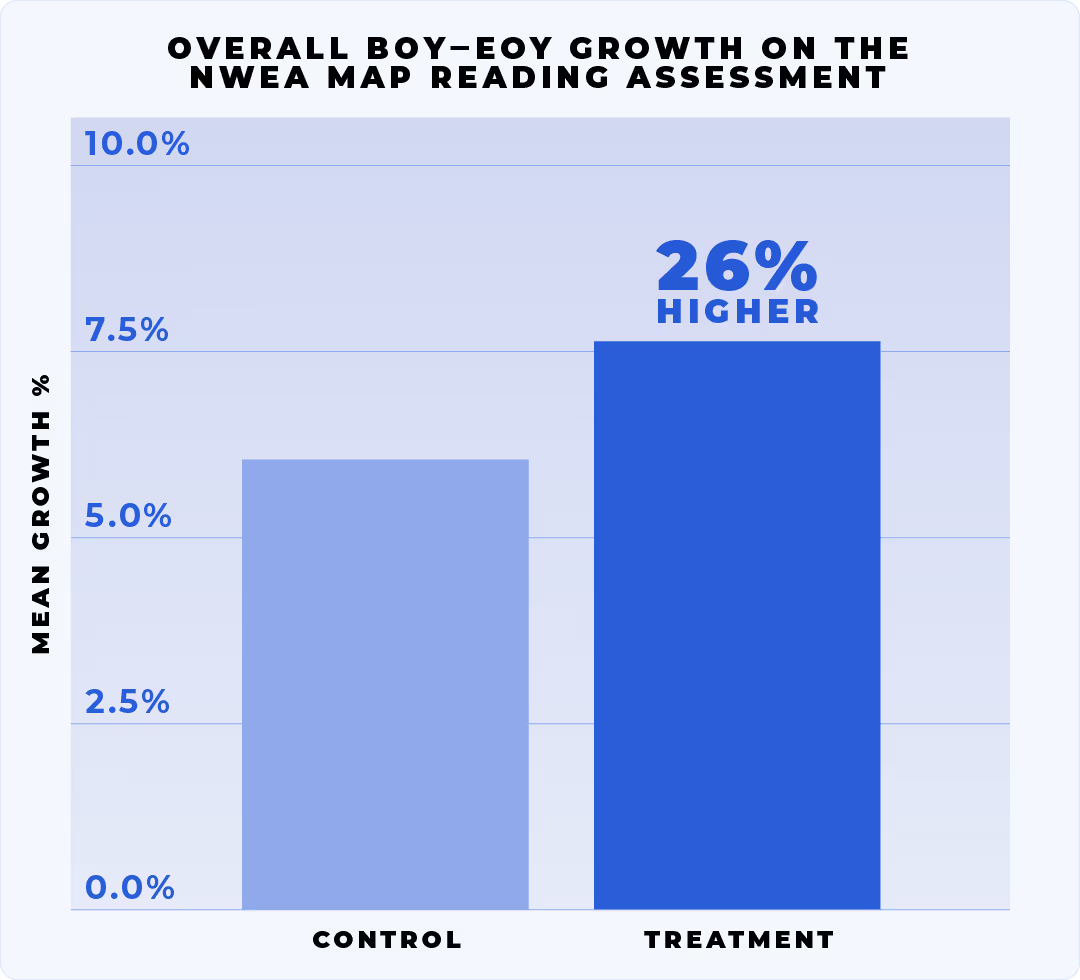
ESSA-backed evidence shows that Multilingual Learners using Connect to Literacy™ with fidelity outpaced their peers by 26% on NWEA MAP Reading growth in a large urban Texas district—clear proof that targeted language and literacy instruction accelerates results.
This finding comes at a critical moment for district leaders. Accountability pressures are increasing, student populations are becoming more linguistically diverse, and districts are being asked to demonstrate measurable impact—especially for students acquiring English.
The study analyzed Beginning-of-Year (BOY) to End-of-Year (EOY) MAP Reading data for 19,100 Multilingual Learners in grades 2–8 during the 2024–25 school year.
Students represented a broad range of English language proficiency levels, from Beginning (Level 1) to Advanced High (Level 4).
For the purposes of this research, the students were divided into two groups:
Both groups had access to the district’s core literacy curriculum. Connect to Literacy™ was the only instructional solution specifically designed to accelerate English language development through explicit, multilingual literacy instruction, aligning to best practices for multilingual teaching and learning.
To ensure the analysis measured instructional impact—not incidental usage—the researchers defined high fidelity usage. They employed clear, quantifiable criteria. Students were included in the treatment group if they:
This allowed them to reliably link outcomes to the learning that took place in Connect to Literacy.
The results were both statistically significant and instructionally meaningful.
Here’s a detailed summary of how the treatment group’s end-of-year MAP scores compared to their peers’ scores.
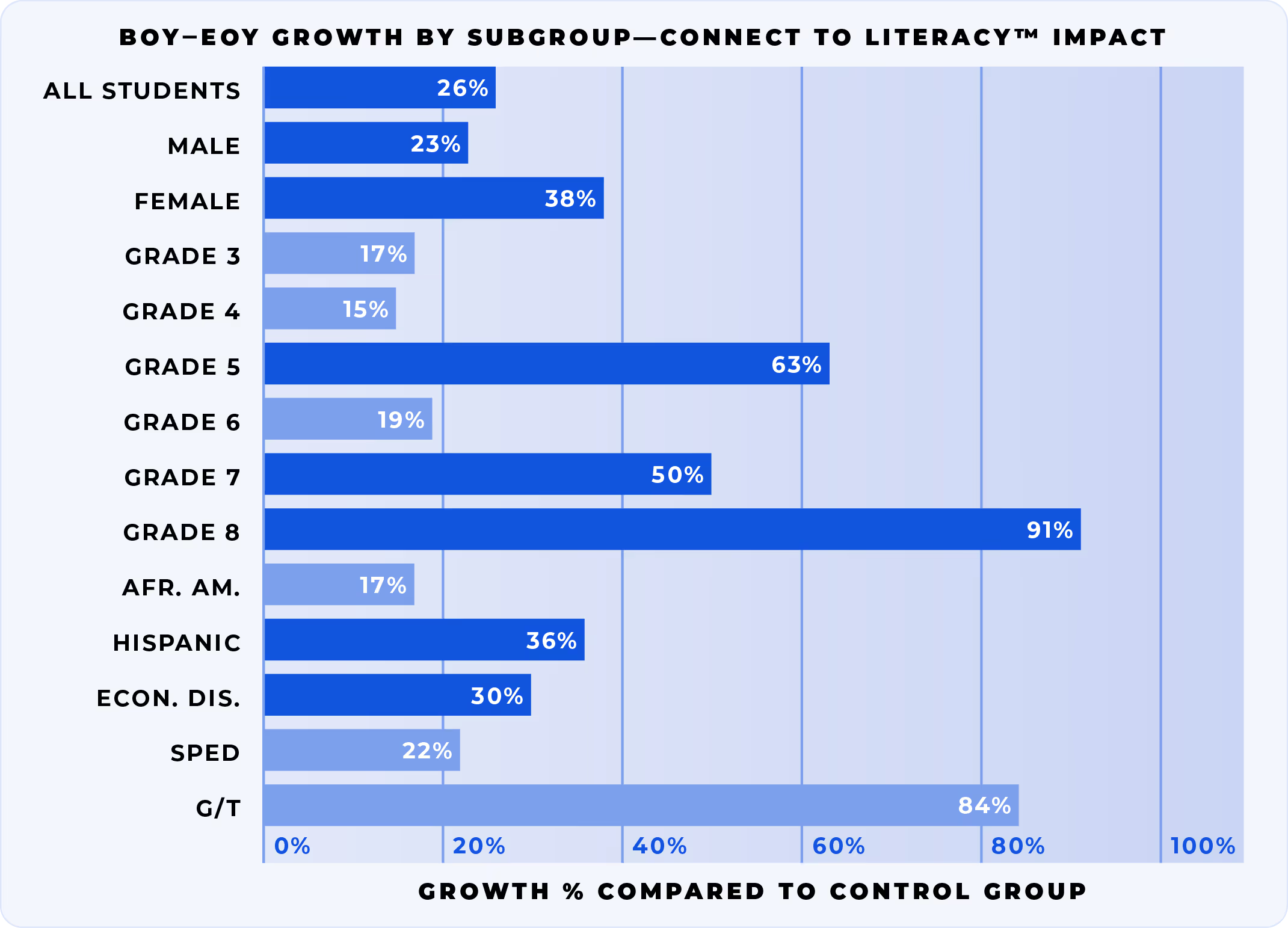
They also achieved higher TELPAS Language Proficiency Composite Scores:
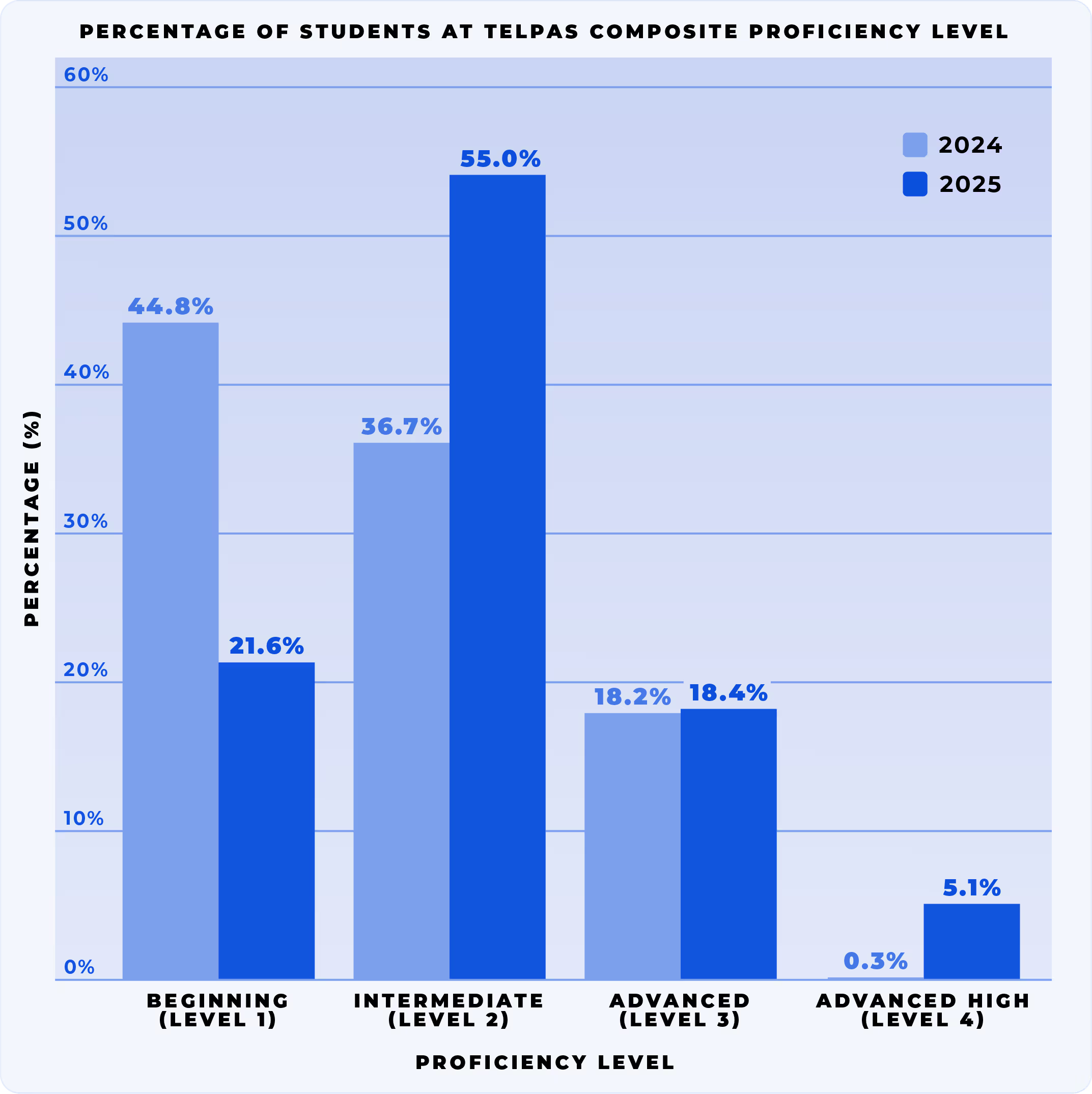
Statistically significant gains were observed across multiple student populations, including:
Notably, treatment group students began the year with similar or lower baseline MAP Reading scores, reinforcing that gains were driven by instruction—not prior academic advantage.
A sensitivity analysis revealed a clear, consistent relationship between program usage and student growth.
These findings reinforce a core principle for multilingual leaders. Districtwide consistency—not classroom-by-classroom variation—is what drives results.
A quintile analysis examined growth across five performance bands—Low, Low Average, Average, High Average, and High—across three MAP Reading goal areas:
Treatment group students outperformed the control group in 14 of 15 possible comparisons. The most significant gains occurred among students in the lowest-performing quintile, while students in the highest-performing quintile also demonstrated strong growth.
These results show that Connect to Literacy™ accelerates learning for students who are behind and continues to challenge students who are already performing at higher levels, supporting instructional coherence across the system.
The results of this large-scale study demonstrate that Summit K12’s Connect to Literacy™ is a research-backed, scalable solution for accelerating reading growth and English language development among Multilingual Learners.
With a 26% average growth advantage, statistically significant gains across key subgroups, and clear improvements in TELPAS proficiency, the program delivers measurable impact where districts need it most.
When implemented with fidelity, Connect to Literacy™ does more than support compliance—it helps districts close opportunity gaps, strengthen literacy outcomes, and build sustainable systems for multilingual learner success.
Budgets are being reduced. This district is dropping programs that don’t deliver results and
is scaling Connect to Literacy™ across every campus—because results like these can’t wait.
Here’s what you can do: